Tuesday, July 27, 2010

A Chinese Herb & M.S.

The Wall Street Journal recently ran an interesting story, entitled "MS Drug's Epic Journey from Folklore to Lab" -- the subject being an herb from the traditional materia medica of Chinese medicine, called dong chong xia cao (winter bug summer herb). This "herb" itself is an interesting amalgamation -- it is actually a fungus that grows upon a worm and eventually takes over its carcass as a home. This type of growth is called an endoparasitoid -- not very appealing to the ethical vegetarian!
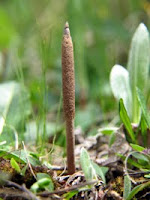
Dong Chong Xia Cao has a relatively recent history in Chinese herbal medicine: only some 300 years of documented use. It is classified as a Kidney yang tonic, which generally means a warming tonic but this herb doesn't damage yin in the process, so it's not too drying. It is especially known for its use in treating respiratory diseases as it settles coughs & wheezing. In recent decades. it's gained some notoriety for its use in improving Chinese athletes' performance. It is mostly harvested from the provinces of Tibet, Sichuan, & Qinghai, -- where its value has recently increased, even causing little frontier wars over collection rights. Despite its rather "icky" provenance, dong chong xia cao is considered a gentle tonic with very little toxicity.

Multiple sclerosis (usually just known as "M.S.") is a neurological disease of unknown etiology. It was recognized as a disease-syndrome in the 1868, by a famous neurological physician, Jean-Martin Charcot (this doctor conducted wide-ranging clinical work & research in neurological disorders, hysteria and hypnosis). For an unknown reason, the body itself apparently attacks the myelin sheath of the central nervous system, giving rise to a variety of neurological symptoms (changes in sensation, muscle weakness, fatigue & others).

Most modern pharmaceutical drugs are derived from herbs -- often from research that looks at herbs with specific medicinal functions. The working theory is that by extracting what is presumed to be the most "important" element of the herb, and then concentrating, or standardizing it, the resultant product will have an amplified ability to do whatever the source herb does. It's an interesting approach, this idea of isolating the single curative element from a raw material. But what if it's wrong? What if removing one element from an herb -- or one herb from a formula -- reduces its efficacy, or increases its toxicity, or unleashes heretofore unseen side effects? (Note that in this article, the isolated element of dong chong xia cao was too toxic for human use -- despite the herb's actual documented human use!)

Those other elements and additional herbs often have all those functions: they potentiate each other, they neutralize side effects, they negate toxicities, they increase bio-availability. The basic philosophical concept of Asian poly-pharmacy herbalism is of an herbal "community" of herbs working together in those ways inside of a formula that is actually part of the elegant art we call herbalism.

I find it interesting that this article looks at the concept of "retrieving" or "rescuing" valuable drugs from herbs used in medicinal traditions. I wonder what do modern researchers lose by looking at trying to take these traditional "tools" without their operating instructions? Happily, more & more clinical pharmaceutical-based medicine is turning towards the concept of working with polytherapies & the greater strength of combinations -- as for instance, the triple cocktail for HIV, and new malaria treatments.


Off-line Sources

1. Bensky, Clavey, Stoger. Chinese Herbal Medicine Materia Medica, 3rd ed.
2. Wu. Ben Cao Cong Xin.

Saturday, July 17, 2010

Oatmeal for Breakfast

I love cooking oats with cinnamon for breakfast. Oats are incredibly healthy and here is whyi:


  • Oats remove cholesterol from the digestive tract and arteries & strengthen cardiac muscles.

  • Oats can be used in cases of dysentery, diabetes, hepatitis, nervous and sexual debility, indigestion and swelling including abdominal bloating.

  • Oats help renew the bones and all connective tissue.

  • Oats contain phosphorus, required for brain and nerve formation during youth.

  • Oats are useful as a poultice to relieve itching. They also heal and beautify the skin when used as a pack.

  • If drunk regularly, oat water acts as internal antiseptic to strengthen immunity and ward off contagions.

In addition, oatmeal can regulates your digestive system. It is the best breakfast to eat if you have diarrhea or constipation or both (like in IBS).

How to cook cinnamon oatmeal?


3-4 full tablespoons of oats

2 cups of water

Cinnamon powder

1 Banana/pear/peach/apple

Walnuts

Honey


  • In a small pot, use medium fire to warm the water with as much cinnamon as you like, for half a minute to let the water absorb the cinnamon.
  • Add the oats, mix them into the cinnamon-water and keep it on low to medium fire for another half a minute. The reduce heat to very low, and cook for 5 minutes. Gently stir it 2-3 times.
  • Meanwhile, cut a banana & wash a handful of walnuts. When the oats are cooked pore the oatmeal into a bowl, then add the banana, and the walnut, and add some honey on the top for extra sweetness.

If you don't have banana, you can use a pear, a peach or even an apple. Since the fruits are sweet, you can choose not to add the honey.

Coconut: sometimes I add shredded coconut to the cooking oats, and cook with it for couple of minutes.

You can change the amount of water and oats to get more liquid-like or thick-like oatmeal.

Some people like their oatmeal salty....so I guess that would be without cinnamon, fruits, nor honey, just salt.

After a big bowl like that, I am full for at least 5 hours.


Enjoy!


Eran Pupkin

i Paul Pitchford, Healing with Whole Foods, page 469

Mujaddara --- Brown Rice & Lentils

Mujaddara --- Brown Rice & Lentils

In the middle east Mujaddara is a common & important dish, usually served at lunch or dinner with cooked vegetables on the side. The combination of brown rice with lentils creates a complete protein i and therefore it is one of the most basic dishes in the Mediterranean diet. Brown rice is sweet, and therefore strengthens our digestive system. It has vitamin B so it is beneficial for the nervous system – and can help relieve mental depression. It also treats diarrhea & nausea. Lentils as part of the legumes family are not only high in protein, but also in fat and carbohydrates. They are rich source of potassium, calcium, iron, and several B-vitamins.ii

Why brown and not white?

An old Japanese proverb, “eating grains without their skins causes people to become poor (in body and spirit) and to have no clothes (protection against coldness and disease)”iii

White rice is created by removing both the bran and germ layers underneath the husk (the outermost layer of a grain of rice). By doing so, several vitamins and dietary minerals are lost, such as vitamin B1, B3, iron, magnesium. bran oil may help lower LDL cholesterol. Brown rice is made by removing only the husk, thus retaining all the vitamins and minerals. Brown rice is also said to be less constipating than white rice.


How to cook brown rice?


1 cup brown rice

2 – 2 ½ cups water

salt

black pepper

1 slice of ginger


Wash the rice a few times. Slice a piece of ginger, and cut it to small pieces (You don't have to peel the skin, it is edible).


  • Place rice, water, salt and the ginger in a pot with a tight-fitting lid.

  • Cover and bring to boil.

  • Turn heat to low and simmer for 45 minutes or until the water has been absorbed.

  • Remove rice from pot and serve.


If you don't like ginger, you can substitute it with garlic, or other spices such as fennel seed, star anise, cardamon, garlic, coriander seeds etc.


How to cook lentils?


First soak the lentils in water for 3-4 hours; then strain the water.


What you need:


1 cup of lentils

3-4 cups of water

Spices: cumin, coriander, ginger, garlic, fennel seeds.

1-2 big onions

How to cook:

  • placed soaked lentils, spices and water in pot.

  • Bring to boil.

  • reduce heat to low, cover and simmer for an hour or until the water has been absorbed.


Cut the onions to small pieces. Fry them in a pan with some olive oil until they turn golden.

Add the fried onion on top of the lentils and serve.


Now you have 2 dishes, rice and lentils. You can mix then together in one big bowl and let the flavors mingle, or you can serve it separately on your plate. Of course adding colorful veggies to your plate would be great!


Bon appetit!


Eran Pupkin


i A complete protein (or whole protein) is a source of protein that contains an adequate proportion of all of the essential amino acids.

ii Healing with Whole Foods by Paul Pitchford, page 507

iii Ibid

Monday, July 12, 2010

Sunshine Senior Center Acupuncture Clinic - Now every week!

We are now officially seeing patients at the Sunshine senior center on a weekly basis!

On average we have about 6-10 retuning patients every week, and we are glad to see
new people joining in the group. At the Sunshine senior center, we are treating various conditions such as Alzheimer's, poor memory, joint pain, digestive issues, headache etc.

If you know a senior citizen who is in need for medical attention, please tell him/her to come see us.

It is free of charge, of course.

Eran & Chris

Thursday, April 29, 2010

the Mediterranean Diet & the Brain

A recent American Society for Nutrition press release gave another "thumbs'up!" to the Mediterranean Diet.

A study gave cognitive skills tests to more than 4,000 adults aged 65+ over a 15-year period, and found the highest scores on the tests & least cognitive decline amongst the participants who were following the Mediterranean diet.

Rather than asking people to avoid certain foods, the study found data that "adults over age 65 should look to include more olive oil, legumes, nuts, and seeds in their diet in order to improve their recall times and other cognitive skills, such as identifying symbols and numbers."

Of course, regular physical exercise is also part of good mental functioning.

See the full story here.

Saturday, April 17, 2010

Portobello for lunch

Portobello for lunch

This afternoon I felt like eating a homemade nutritious sandwich

The ingredients:
  • Tomato
  • Red pepper
  • Portobello mushroom
  • Olive oil, salt & pepper
  • Rye bread
  • Fresh ricotta cheese.


Directions
:
  1. Cut the stem of the mushroom, slice the tomato and the pepper.
  2. Put a little bit of olive oil in a pan
  3. Put the mushroom and the pepper in the pan. Fry on low-medium fire. Flip the mushroom every once in a while so it will cook well on both sides. Towards the end, season with a little bit of salt and black pepper.
  4. On the plate, sprinkle some sweet red paprika, and arrange the tomato slices
5. Cut a thick slice of bread, and spread some ricotta cheese on it.
6. The mushroom should be ready by now, so put it on your bread, with the red pepper on top.


Bon appetit!

What is this stuff good for?

Because all of the ingredients are fresh, this is a meal without preservatives.
  • Mushroom – strengthen your immune system.
  • Olive oil, tomatoes and peppers are part of the Mediterranean diet – fresh vegetables & fruits, olive oil, legumes, unrefined cereals, moderate amounts of dairy products (mostly as cheese and yogurt), some fish, little meat, and moderate wine consumption. Olive oil is nutritious and contains a very high level of monounsaturated fats – which studies suggest is linked to a reduction in coronary heart disease risk. There is also considerable clinical data that the antioxidants in olive oil can provide additional heart health benefits such as positive cholesterol regulation and LDL cholesterol reduction, and that it exerts additional anti-inflammatory and anti-hypertensive effects.

On top of all of this, you get the satisfaction of making a delicious (& appealing) meal for yourself and/or your loved ones!

The preparation time was only 10 minutes – a small investment in long-term health benefits!

Enjoy,

Eran

The Importance of Water


As a clinician, I spend a fair amount of time talking with my patients about their lifestyle habits, sometimes we work together in ways to move them towards a healthier life, and yes, often this includes looking at their drinking & eating habits. Most Americans don't drink water -- we drink everything else (coffee, soda, adult beverages, juice, lemonade, pina coladas, Red Bulls, milkshakes) -- which of course means that we're getting some water, plus a lot of other ingredients. There's some thought that most Americans are living with a certain chronic level of dehydration (75%, according to this blog entry), and that we get a lot of our fluids from our foods. (And, don't we have a national weight problem?????)

Of course, in this country we (most of us) have access to clean water -- we just don't choose to drink it. In many parts of the world, the supply of clean, drinkable water is drying up -- due to pollution, global warming, insufficient or destroyed infrastructures (an example of the latter being in post-quake Haiti). It's been speculated for several years that the next large international war may be over access to potable water supplies.

A major cause of the pollution of the global water supply is the lack of basic sanitation -- not too much of an issue in the countryside because rural environments can absorb (no pun intended!) and even put to use human excreta (it's called "nightsoil"). In the cities, and most particularly in the growing slums of the heavily-populated urban world, it's a serious issue --
according to the Charity Water website:

90% of the 42,000 deaths that occur every week from unsafe water and unhygienic living conditions are to children under five years old. Many of these diseases are preventable. The UN predicts that one tenth of the global disease burden can be prevented simply by improving water supply and sanitatio
n. An interesting and innovative approach to working to minimize the impact of the lack of world sanitation is a cute little invention called the "peepoo." The peepoo is small biodegradeable plastic bag, intended for use as an instant latrine. One uses it, ties a knot in the neck of the bag & then buries or tosses it away. The inside of the bag is coated with a thin layer of urea, which helps to sanitize the natural "products" and convert them into natural fertilizer.

I think this is a brilliant little idea -- what my father likes to call "a simple solution to a complex problem." The inventors describe it as personal, as in personal computer; ... mobile, as in mobile phone; and micro, as in Microsoft.Please take a look at the peepoo website for more information. (The site is full of pictures from its test site at an informal settlement in Nairobi, including the one above. (This image is borrowed from the peepoople website -- check in with
info@peepoople.com for more.)